Anticipating the Gendered Impact of AI on Working Conditions

Insights from the BRIDGES 5.0 / EUWIN webinar, 30 October 2026, with Karine Babule (ANACT, France)
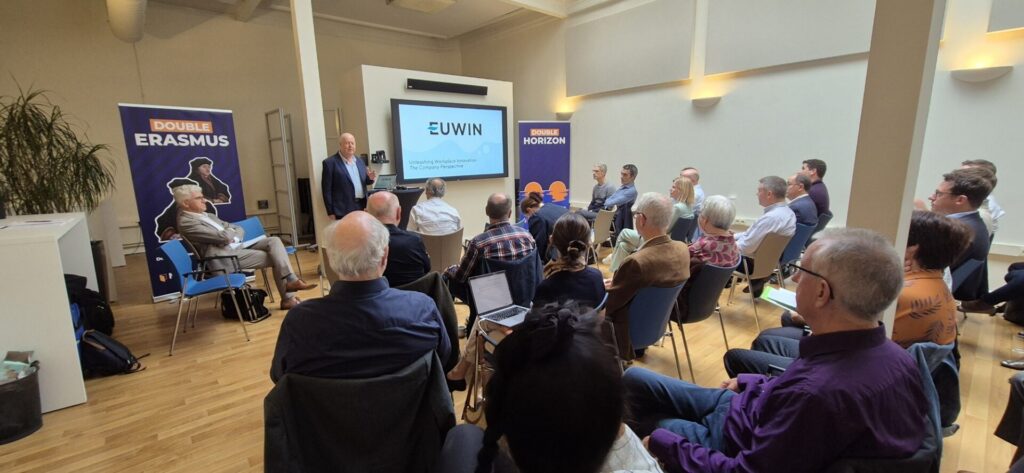
Technology alone will not deliver productivity or job quality. That simple premise sits at the heart of the BRIDGES 5.0 project, and it framed the latest webinar in the series, co-hosted with EUWIN and moderated by Allison Dunne. The question on the table: how can we anticipate the way AI will affect the working conditions of women and men differently?
To explore it, the webinar welcomed Karine Babule from ANACT, the French National Agency for the Improvement of Working Conditions. ANACT is a public body overseen by the Labour Ministry and social partners, with a mission centred on work organisation, workplace relationships, social dialogue and occupational safety and health.
Why a gender lens on working conditions?
For ANACT this is not a new topic. Gender-sensitive analysis has been part of its methods for some twenty years, and French law has required a focus on differences in exposure and health impacts between women and men since 2014. The reasoning is practical: when prevention accounts for both work and non-work situations, as well as biological differences, diagnostics and action plans improve for everyone.
ANACT’s framework looks at four dimensions where women’s and men’s experience of work diverges:
- Occupational segregation. Women and men are concentrated in different jobs and, even within the same job, in different tasks.
- Exposure to risks. Hazards in female-dominated sectors are often less visible, and health and safety policy has traditionally been designed around men, overlooking reproductive health, women-specific issues and sexual violence and harassment.
- Career paths. Opportunities for development differ, and long exposure to invisible risks produces wear and tear.
- Working time and work-life balance. Different sectors, different schedules and different loads outside work mean different room for manoeuvre.
The consequences are measurable. Karine pointed to a pay gap of around 21% and a pension gap of roughly 40% in France. Over the last twenty years, workplace accidents have fallen by about 11% overall, but that average hides a drop of around 25% for men and a rise of around 40% for women. Occupational diseases are rising too, and faster for women.
What do we actually know about AI?
Honestly, not enough yet. Most organisations are still experimenting, so many of the impacts discussed are hypotheses, and cross-cutting research on AI, work and the health of women and men remains thin. The debate so far has focused on equal access to technology, bias in algorithms and gender segregation in digital careers, with much less attention to working conditions.
What existing evidence does suggest, drawing on recent International Labour Organization (ILO) analysis:
- Generative AI is entering a labour market that is not gender-neutral. Exposure is higher in female-dominated occupations (about 24%) than in male-dominated ones (about 16%), largely because women are over-represented in administrative and business support roles whose tasks are routine and codifiable.
- Exposure is not destiny. AI may automate some tasks and augment others, and the ILO stresses that AI is more likely to transform job quality than to eliminate jobs outright.
- Early AI-attributed layoffs have clustered in finance, IT and business services, although AI is sometimes used as a pretext for workforce reductions with other causes.
- Female-dominated occupations often serve as an entry point to the labour market for women, so their erosion would carry real costs.
Karine also cautioned that exposure scores are built from task descriptions and models, not from work as it is actually performed. They show possible transformation, not reality.
A case study: social workers and generative AI
Qualitative cases matter as much as statistics. In one example, social workers use a generative AI tool to transcribe interviews, draft reports, carry out documentary research and help prepare individual support plans. The goal is to cut administrative time and free up more for children and families.
The social worker, however, stays fully accountable for accuracy and must review, correct and contextualise every output. The risks identified include stress linked to transcription errors, the cognitive load of checking AI-generated content, worries about declining critical thinking and professional judgement (especially among newly qualified staff), pressure from professional accountability, data confidentiality concerns and a degree of standardisation. The pointed question Karine raised: is administrative work simply being replaced by invisible verification and oversight work?
Where inequalities could be reinforced or created
Mapping AI’s potential effects onto the four dimensions, several risks emerge. Many are not gender-specific in themselves, but they can land unevenly:
- Job content: algorithmic management, intensification, standardisation, reduced autonomy, technological dependence and the burden of spotting AI errors; with consequences such as techno-stress, cognitive overload, job insecurity and loss of meaning or recognition.
- Prevention: if occupational risk assessments ignore gender differences, and if prevention itself starts to use AI, differentiated impacts may be missed. New risks of technology-facilitated violence and harassment also need attention.
- Careers and skills: women are more represented in roles exposed to automation, men in roles where AI complements existing skills, creating an unequal risk of deskilling. Technical and digital skills may be rewarded while interpersonal, organisational and care skills stay undervalued.
- Access: access to AI tools varies with position, qualification and autonomy.
- HR and recruitment: AI tools for CV screening, performance assessment and HR management can reproduce or amplify stereotypes.
- Working time: algorithmic scheduling can make hours less predictable, blur the boundary between work and private life, and interact with remote working in ways that affect the invisible coordination work of reconciling paid work with care and domestic duties.
How to anticipate: gender mainstreaming in AI projects
ANACT’s answer is a gender mainstreaming methodology, applied from the very start of a project. It distinguishes three levels of maturity: an intention with no method behind it; an intention partly translated into method; and an intention backed by a full methodology that evaluates impact throughout the project. ANACT has set out 17 methodological principles. Among the first steps:
- Examine from the outset how the project’s transformation goals intersect with gender equality and equity.
- Build on three foundations: balanced representation of employers and employees, analysis of work as actually performed, and a commitment to gender equality and equity.
- Carry out an initial gender-differentiated assessment with the different actors, then formulate hypotheses of impact across the four dimensions.
- Ensure gender-balanced representation in decision-making bodies and project teams, and collect both quantitative and qualitative data.
ANACT is currently working with ten AI projects, including digital tools supporting the social and employment inclusion of groups such as people with disabilities and young people from disadvantaged neighbourhoods, projects with inclusive business models but no gender focus, and projects automating administrative activity in female-dominated occupations. Workshops with them revolve around five questions: What inequalities exist today? What risks are there of reinforcing them? What risks of creating new ones? What methodological conditions are needed? And what constraints, resources and needs would make integration possible?
The lessons were encouraging. None of the projects had been designed with gender in mind, yet through discussion participants progressively identified gender-related issues and then linked them to AI. The obstacles they named: juggling several cross-cutting issues (AI, environment, gender), lack of time, difficulty accessing data, entrenched occupational stereotypes and the reality of sexual and gender-based violence and harassment. What helps: clear commitments at the start, expert support, exchange between projects, workshop tools, simple guiding questions, better use of national data, involvement of employee representatives and an intersectional approach.
Karine also stressed that OSH tools, and the people trained to use them, should integrate a gender-based approach to prevention when AI-related risks are added.
Discussion highlights
Steven Dhondt asked whether ANACT had engaged with France’s flagship AI developer, Mistral, so that recommendations could shape how large language models are built. Not yet, Karine replied, though the Labour Ministry has launched a major programme on AI’s impact on work, to which ANACT is contributing tools for social and socio-technical dialogue. Her concern: economic imperatives dominate AI development, and the human-centred dimension risks being under-weighted.
Segolene Journoud (ANACT) asked what single lever would matter most for companies. Karine’s answer: recognise that AI is not only about performance but also about working conditions, for a diverse workforce. Before any methodology, organisations need to ask which jobs are affected by AI, how, and what characterises the employees concerned.
Valeria Cirillo argued that real progress may require rewriting the algorithms and language models themselves, pointing to platform work, where different models could allocate tasks in ways that protect work-life balance and reduce discrimination. Karine agreed, adding that her projects are exploring how to train AI tools with a gender mainstreaming perspective, and shared an anecdote: the same AI tool, depending on who set it up, can summarise qualitative data in ways that preserve or erase important nuances. Bias must be checked not only in algorithms but also in the tools used within change-management projects.
In response to a participant’s question about publicly available deliverables and sectors, Karine explained that the work is at an early stage with no single sector focus; findings will feed into the Labour Ministry’s wider programme.
Key takeaways
- AI is more likely to reshape job quality than simply remove jobs, and that reshaping may not be gender-neutral.
- Evidence is still thin: treat current claims as hypotheses and ground them in analysis of work as actually performed.
- Qualitative case studies and worker voice are essential complements to statistics.
- Gender mainstreaming works best when it starts at project kick-off, with clear commitments and a method.
- Fairness is also a design question: how models are built, trained and configured shapes who benefits.








Responses